"You talk as if a god had made the Machine.. Men made it, do not forget that. Great men, but men. The Machine is much, but it is not everything. I see something like you in this plate, but I do not see you. I hear something like you through this telephone, but I do not hear you. That is why I want you to come. Pay me a visit, so that we can meet face to face, and talk about the hopes that are in my mind."The machine stops - 1909 - Forster
Showing posts with label grammar. Show all posts

Wednesday, May 21, 2014

INTEGRATING TECHNOLOGY: comparatives in a semi-flipped classroom

Flipping the classroom is a process which needs to be done by small steps and it is not just about creating and watching videos. There are many ways to flip a class, if we consider "flipping" as reversing roles as well as instructions. This way teachers don't simply deliver information - to be accessed whether at school or at home - but they create the ideal conditions for students to discover what they need to build new knowledge by themselves .
What follows is our semi-flipped experiment on a grammar point - comparatives - carried out in class 2 of Middle School.

Step 1

After working on vocabulary and introducing some common adjectives with various activities ( quizlet, wheel of emotions are two of them ) students were told they had to focus on how to make comparisons.
I drew a big mushroom on the blackboard and I elicited adjectives from the class. I wrote each adjective in "strategic"and different parts of the mushroom, without explaining the reason for the specific collocations.


Step 2

As follow up , at home , the students had to :
- personalize their mushroom
- go to an online board  and post their answers to the following questions ( they were numbered from 1 to 6 and they were given a different question each ) 
1) How were the adjectives sorted?
2) Why did we sort the adjectives in such a way?
3) Why are "good" and "bad" out of the mushroom?
4) Why did we choose a mushroom?
5) Where would you put the following adjectives: .....?
6) Which grammar topic is related to this activity? 

Our aim was to make them think about possible solutions and make them aware of different patterns.

These are the results.


Step 3

The answers were discussed in class, I tried to speak the least possible and and the end the students agreed on a classification based on the length of the adjectives. Then , for homework, they were directed to this glogster which they had to explore and  where they could watch a  video in italian on comparatives and superlatives. They were left free to choose what to see and how to practice.


Step 4

The following lesson the students "volunteered" for a test. To be honest, not all of them had done the homework, but this is part of the game. 
The results showed that some students at this point ( 4 out of  25 ) mastered the topic, even more than they were required as they also watched the video on superlatives.
To wrap things up:
- so far I hadn't "explained" anything
- 16% of the students had underdstood a grammar topic by simply watching videos and  speculating on key input
- most of the students were on the right path to a clear understanding, even if they were not totally accurate in translating sentences from L1 to L2
- a couple of students were not involved at all

So, what was different from a traditional classroom scenario where the teacher delivers information by lecturing? In my opinion the differences have to be found more in the added value of the process itself than in the final results. Students were active right from the beginning, they used their higher order thinking skills, they probably improved their ability to retain information thanks to the memorable and visual way to introduce the topic, they had the oppurtunity to express their opinion and to evaluate their classmates' ones , they could choose the level of competence they wanted to reach and, hopefully, they could realize how crucial their role in learning is and that they don't need a teacher to feed them but simply someone to guide them towards autonomy.

Step 5

Students were divided into groups ( with a "master" student in each group ) and they did activities on comparatives. 

Step 6

Finally, I "explained" how to form comparatives and I made a video students could refer to just in case they needed to revise.

Thursday, January 19, 2012

How to make students "digest" the Past Simple


 PAST SIMPLE : AN EASY RECIPE

Ingredients

  1. from 20 to 25 students beginner level ( possibly aged 12-13 )
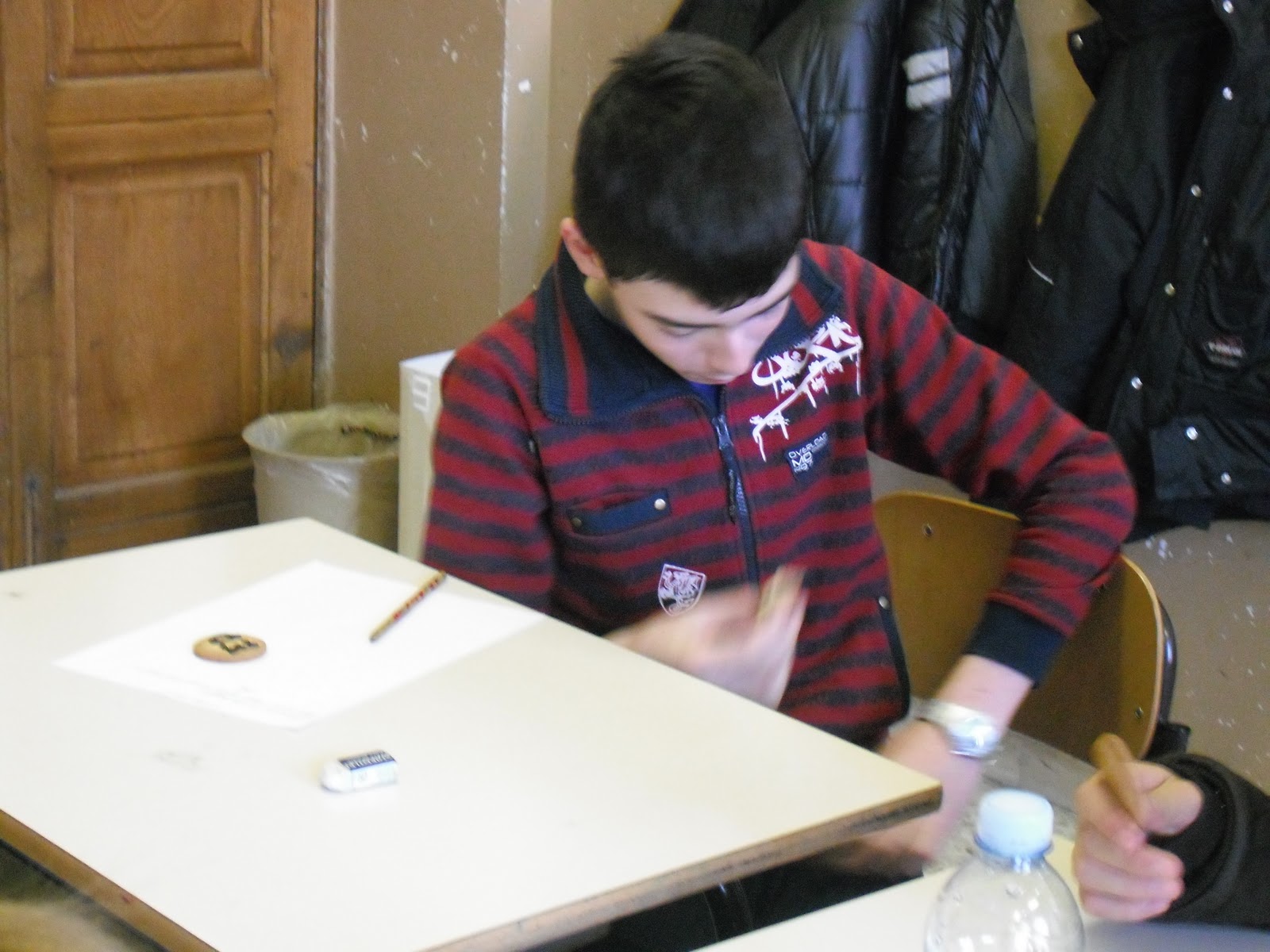
  2. at least 100 biscuits decorated with chocolate  ED
  3. a blackboard or IWB

Prep Time

45 minutes


Instructions

Tell students you have both GOOD news ans bad news.
Ask them what they want to start with ( for a better result make them choose the first option ).
Elicit verbs in the infinitive. Write just the GOOD ones on bb (  if they say "eat", "sleep", "go"...make a sad face and say "sorry, that is bad news" ). When you have a lot of them displayed on the blackboard, tell them to close their eyes. 
Explain they're going to learn how to form the past tense. Point out the fact that it's going to be hard work and 
 that their brains need a lot of sugar to take in the information.
After some "reflection" time, invite them to open their eyes. Show them the box with the biscuits.


Enjoy the smiling faces.
Make them understand they have to "eat" the Past Simple in order to "digest" it.
Serve the biscuits which can't be eaten until a lot of class drilling has been done.
At this point, in pairs, students eat and speak, repeating the verbs with the correct ending pronunciation and with their mouth full. :)


Next, pass to the bad news ( the irregular verbs with their forms to be studied by heart )

Homework for the following  lesson : digest the Past Simple.


                                                    *******************************


I thought this could be an example of good practice......


Tuesday, July 5, 2011

Jump through the ...whoops! Spelling mistakes


Write on blackboard 
( both numbers and words ):


ImageChef.com - Custom comment codes for MySpace, Hi5, Friendster and more


Text to read to the students:


Tuesday, June 28, 2011

Friday, November 26, 2010

PHRASAL VERBS - GLOGSTER

This glogster is for the students who are going to take Trinity level 6.
Try and WORK IT OUT. There are a lot of exercises but CALM DOWN and don't GIVE UP...you can GO THROUGH it!! :)
When all the exercises are over, PICK UP 25 phrasal verbs , COME UP WITH your personal "top 25", and WRITE them DOWN in a list. Which ones? It's up to you..then we'll compare your list to mine.

Click here to open he glogster.

Monday, November 15, 2010